13 entries
Tag collecting pages that feature broadcasts sourced from TV5.
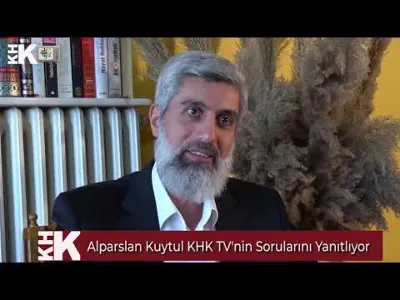
The picture he gave on the TV5 broadcast of 11 December 2019: as of that day 9 cases opened, 3 acquittals, 6 ongoing files, and release at the first hearing in two separate files.
The picture as of 11 December 2019 in his own words: the associations were closed by KHK, a trustee was appointed to the foundation, and the sealed student houses were reopened after the Ministry of National Education's report.
A crisis warning from one of his sermons was placed in the indictment of the 30 January 2018 file with the question "how did he know this"; Kuytul explains that this was not a prophecy but a sentence about consequences.
His answers, in three separate programmes within the ten days after his release, to the question of being arrested again: the coal-and-diamond analogy, that the appointed hour is but one, and that he is at home.
He explains why no other religious communities or orders spoke out during his 22-month detention by pointing to partisanship; as his criterion he cites Hazrat Ali's advice to at least make oppression known.
He describes the term he uses so often himself: the dominant bureaucracy that turns secularism into hostility toward Islam. He separates the government from it, because the grievance and the demand of the two are not the same.
His answer to the question of which current in the world the Furkan Movement is affiliated with: it has nothing to do with the Salafi line and no organizational tie to any religious community; benefiting from their books is another matter.
While saying that anyone involved in the coup was guilty, he objected to those who were not involved being put in the same basket. His basis was two official figures: roughly 150,000 dismissals and the 11,480 people the prosecutor's office declared innocent.
He explains, with examples, the criterion of not looking at the identity of the one who has been wronged; and he shows its limit as well: he says that if an injustice were done to the government that put him in prison, he would defend it too.
In the written defence he submitted to the court he listed the three reasons he saw behind the operation of 30 January 2018: criticism of the AK Party, the plans of the deep state and, above all, his expounding of tawhid.
Nowhere is there a requirement to found a party in order to express an opinion. The journalists, lawyers and academics who discuss the country's affairs on television have no party either.
The conference cancellations began in 2014; yet he had objected to the invasion of Iraq in 2003 and to Syria policy in 2011 — that is, eleven years before the event the claim counts as the cause.
He says openly that he supports no party; his measure is not a party but fiqh, and by that same measure he has said he would defend the party he criticises when it is wronged.
Be the first to see new fact-checks as they are published.