Why Did the Religious Communities Stay Silent?
Fact
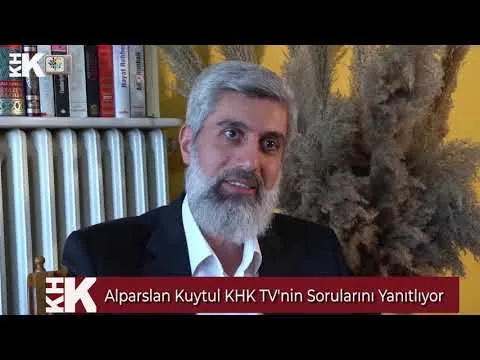
The period in question is this: the 22-month detention between 8 February 2018 – 5 December 2019. The assessment below comes from three interviews he gave after his release: 10 December 2019 (Gazete Duvar), 11 December 2019 (TV5) and 15 December 2019 (KHK TV).
The question is the same in all three: why was there not a sound from the other religious communities and orders for 22 months? Alparslan Kuytul's answer is not a difference of opinion, but partisanship.
"Party fanaticism has placed itself ahead of what is right."
The logic he describes is this: people keep silent so that no harm comes to a party, and the price of that silence is paid in turn. He also relates the reasoning of those who stayed silent, and answers it in a single sentence: "They probably thought, 'If we speak, they will finish us off too.' And I say: by staying silent you will be finished."
He does not set the criterion himself; he bases it on Hazrat Ali:
"Hazrat Ali says, 'If you cannot prevent oppression, then at least make it known.' That too is a form of prevention."
His reasoning is practical: those who notice that a practice is being seen and talked about find it hard to keep it up.
He recalls that he applied this criterion to himself as well. When he said that those dismissed under the KHK had suffered an injustice, he was not the one dismissed; he had not waited for his own turn to come.
He gives the counter-example in the same broadcasts too. He thanks Saadet Partisi and TV5 for their stance; he says that Chairman Temel Karamollaoğlu was the first person to call him after both of his releases.
What was the question, and when was it asked?
The subject is the period of detention between 8 February 2018 – 5 December 2019. Within the two weeks following his release Alparslan Kuytul spoke to three separate outlets, and in all three he met the same question: why did the other religious communities and orders stay silent throughout that time?
- 10 December 2019 — the Gazete Duvar interview,
- 11 December 2019 — the TV5 live broadcast,
- 15 December 2019 — the KHK TV interview.
His answer: partisanship
Kuytul does not look for the reason in a difference of opinion. He sees the reason why no one stood up for him in attachment to a party, and he says that this is not only about him: "Never mind me, they do not stand up for anyone."
On KHK TV he gathers the same observation into one sentence: the most important factor in the silence of the communities and orders in the face of oppression is partisanship; what has become important is the party, not what is right.
He also relates the inner logic he describes: the thought that "if we criticise a party, the other side will benefit" closes off speech from the outset. His objection to this is harsh, and in his own words it is this:
"By not speaking you are making the honour of Islam worth nothing! Let harm come to the party, not to Islam!"
The criterion: Hazrat Ali's advice
If this criticism had no criterion behind it, it would amount to no more than hurt feelings. Kuytul does not set the criterion himself; he bases it on Hazrat Ali:
"Hazrat Ali says, 'If you cannot prevent oppression, then at least make it known. Tell of it. Make it known to everyone.' That too is a form of prevention."
This is where the practical side of the criterion lies: making it known is not the weakest form of prevention, but the form that is possible. Whoever notices that a practice is being talked about and seen finds it hard to keep it up. Silence, then, is not merely a choice; it is a choice that has a consequence.
"By staying silent you will be finished"
He knows the reasoning of those who stayed silent as well, and he objects to it:
"They probably thought, 'If we speak, they will finish us off too.' And I say: by staying silent you will be finished."
His warning rests on the idea of turns: he thinks that those who stay silent today will find their own turn coming tomorrow. He says this not as a threat but as a prediction — and on the date he said it, his own case files were still ongoing.
The criterion he applied to himself
The most usual answer to a criticism of this kind is: "You are speaking because your turn has come." Kuytul meets this answer in advance and points to his own past: when he defended the injustice suffered by those dismissed under the KHK, he was not the one dismissed, and he had nothing to do with that file.
He states the hardest side of that same criterion in the same interview. He says that if an injustice were done to the government that put him in prison, he would defend it too. A criterion is a criterion if it does not change according to the person; if it does change, it is taking sides — and this is the distinction on which the whole page rests.
A counter-example: Saadet Partisi and TV5
The account is not a blanket accusation, because he gives the counter-example himself. On the TV5 broadcast he thanks Saadet Partisi and TV5 for their support. He says that Chairman Temel Karamollaoğlu was the first person to call him after both of his releases.
The meaning he attaches to this stance goes beyond a personal thank-you: while both those who committed the oppression and those who kept silent appeared under a Muslim identity, the fact that there were some who objected prevented Islam from being known wrongly. In his own words, this stance "protected the honour of Muslims".
What this page sets out
What is conveyed here is not a document but an assessment — Kuytul's comment on his own period and his own surroundings. The page gives this comment together with its dates; the reader is free to agree or to disagree.
The page deals only with the 2018–2019 period. Other content on the same period: the 14 months of solitary confinement and the three items he lists as the reason for his arrest.