"I Am Against Oppression, No Matter Who It Is Done To"
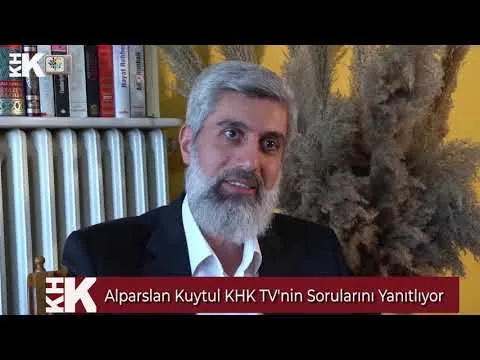
Fact
The words below come from interviews given in December 2019, after the detention of 8 February 2018 – 5 December 2019. What Alparslan Kuytul was asked here was this: does the identity of the person who has been wronged change whether one stands up for him or not?
He gives his answer in the form of a criterion:
"No matter to whom the injustice is done — whether to the Saturday Mothers, to Jews, to Christians or to communists — it makes no difference."
He does not leave this criterion hanging in the air; he lists whom he has applied it to: the Saturday Mothers searching for their disappeared relatives, those dismissed from their posts by emergency decree, the Ensar Foundation, blamed as a whole because of what a single person did, and the CHP and the HDP when they are wronged. Defending the oppression done to one's own circle is easy; this entire list lies outside his own circle.
Whether the criterion really is a criterion is seen in the following sentence. He is speaking of the very government that put Kuytul in prison:
"The AKP put me in prison; they oppressed me so much, they will answer to God for it. But if an injustice were done to the government right now, I would defend them."
This stance had its price as well: he attributes the absence of support from the other religious communities during his own detention not to a difference of opinion but to partisanship, and against it he says a single sentence: "Let harm come to the party, but let no harm come to Islam!"
His own diagnosis is harsh: "Muslims have not been able to learn to stand by the oppressed."
What is the criterion?
Alparslan Kuytul's first sentence on this subject is not a list of exceptions but a rule: the identity of the one who has been wronged does not determine whether he will be stood up for. In his own words, "Islam is to speak for the one who is in the right" — and "Whether it is done to a right-winger or to a left-winger, this is oppression."
Whether a criterion really is a criterion is understood not where it is easy but where it is hard. That is why all of the examples below lie outside Kuytul's own circle.
The Saturday Mothers
He criticises the fact that the mothers who hold a sit-in so that their disappeared relatives may have a grave are obstructed, and that Islamic circles lend no ear to this voice. In his view the question to be asked here is not the mothers' political opinion but whether there is an injustice at hand.
Those dismissed by emergency decree
This is Kuytul's most misunderstood stance. By his own account he had openly criticised the Gülen community in his talks dated 1998, 2005 and 2013; the Turkish Olympiads, the "Interfaith Dialogue" and the failure to condemn Israel had been his objections years beforehand.
His stance on the coup is clear as well: "I am against the coup to the very end. Those who have a connection with the coup are guilty." The people he defends are others — those who lost their jobs and their freedom because they had deposited money in a bank, taught at a school or worked as a doctor at a hospital, although they had nothing to do with the coup.
"I did not defend the coup plotters but innocent people. I accepted prison for it as well."
The distinction he ties to a sentence of the President's own: "'The horse's track got mixed in with the dog's track,' the president had said, hadn't he. And I said, 'do not burn the green together with the dry.'" According to what he relates, the state's prosecutor had announced that 11,480 people were innocent as far as Bylock was concerned; and this is exactly what Kuytul asks for — that the files be looked at one by one.
The Ensar Foundation, the CHP, the HDP
When a foundation close to the government is in question, the criterion does not change: he says that he also objected to the whole community being blamed because of a crime committed by one person. In the same way he states that he would object as well if the one being wronged were the CHP or the HDP.
"We must take the side of what is right. Islam is to speak the truth."
The limit of the criterion: those who put him in prison
The sentence here is the sentence that carries the whole page. After 22 months in detention, he says it of the government he holds responsible for that period:
"The AKP put me in prison; they oppressed me so much, they will answer to God for it. But if an injustice were done to the government right now, I would defend them."
This is the point at which a criterion is not opened up to personal scores: having been wronged is not treated as a justification for suspending the application of the same criterion to the other side.
So why did the others stay silent?
He attributes the absence of support from the other religious communities during his own detention not to a difference of opinion but to partisanship: in his view party fanaticism has been placed ahead of what is right, and the logic of "if we criticise the AKP, it will benefit the CHP" has taken hold. His answer is a single sentence: "Let harm come to the party, but let no harm come to Islam!"
He also says that keeping silent offers no protection — "by staying silent and silent you come to an end". And the criterion he relates from Hazrat Ali he puts forward as a minimum responsibility: if oppression cannot be prevented, it must at the very least be made known, because it becomes harder for a power that knows it has been heard of to keep it up.
The words on this page date from December 2019 and belong to the 2018–2019 period. Other headings from the same period: 14 of the 22 months in a single-person room and the three items he lists as the reason for his arrest.